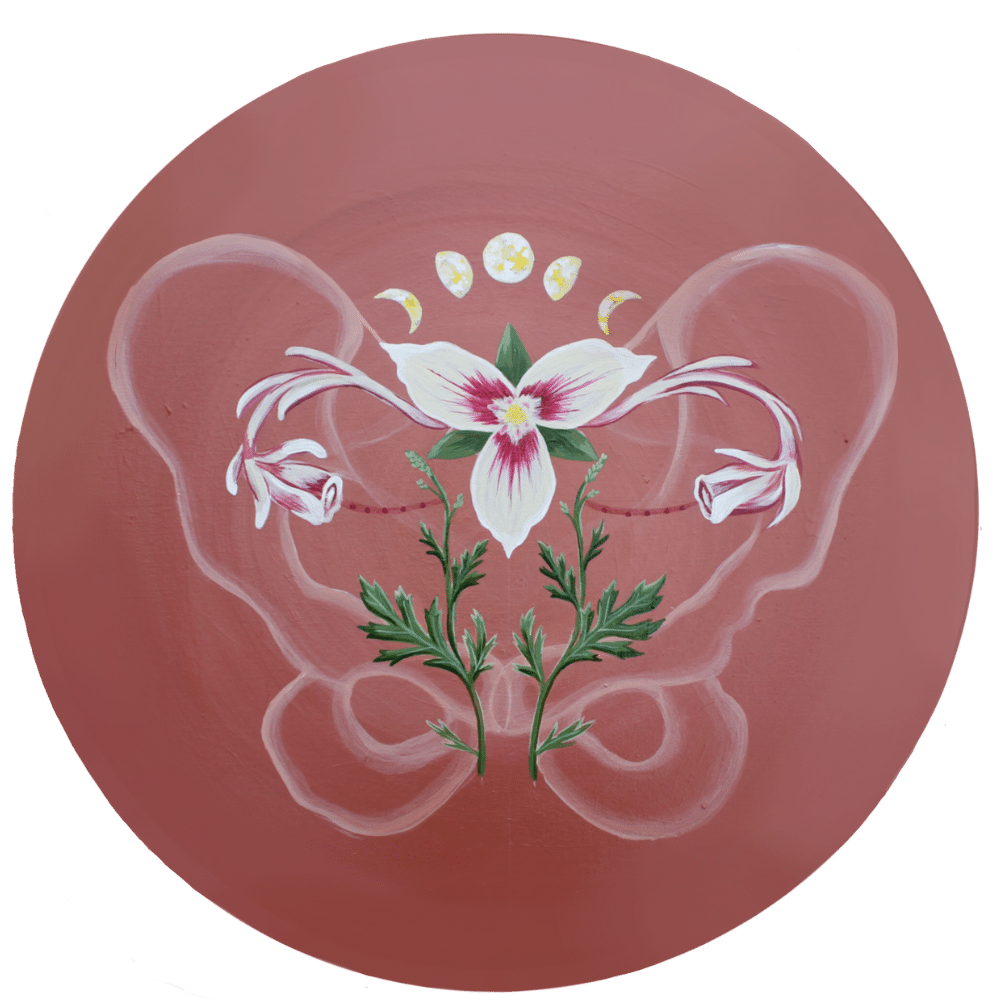
Holistic Pelvic Care
Holistic Pelvic Care™ is a holistic approach to pelvic care that arises from deep listening to your body. It uses gentle internal vaginal massage techniques combined with breath to support balancing the physical and energetic aspects of your pelvis. Together we engage self-inquiry practices to support women to understand the patterns of tension we hold in our pelvic bowls, as well as offer tools for women to learn how to rewire these patterns to create more balance in our sacred centers.
In all stages of a woman’s life, this work restores the pelvic bowl as the creative center of our bodies.
Holistic Pelvic Care™ is a modality pioneered by Tami Lynn Kent, MSPT. Tami began her physical therapy practice in a hospital setting, and as she witnessed the profound physical benefits, she concurrently realized she was able to read energetic patterns of the pelvis. She combined her medical knowledge with her intuitive understanding to create the modality Holistic Pelvic Care™. Tami has written a number of pivotal books as well, the most notable of which is called The Wild Feminine.
Women's Health
Holistic Pelvic Care™ supports women’s health in a myriad of ways. It rebalances the pelvis following a miscarriage or abortion. It supports healing from chronic bladder issues such as infections or Interstitial Cystitis. It supports healing from chronic pelvic pain, vulvodynia and pain with sex.
HPC is also helpful for postmenopausal women who struggle with vaginal dryness or to connect with their sexuality. Some women also notice changes in related areas, such as low back or knee discomfort. It can be supportive, in conjunction with therapy or counseling in healing from abuse or sexual trauma.
Perinatal Health
Holistic Pelvic Care™ is not indicated during pregnancy. In some countries, pelvic floor physical therapy is a standard of care for postpartum women. This should be the case everywhere. Birth is a beautiful process that greatly impacts the health of the pelvic floor and under the best of birthing circumstances, the pelvic floor needs rehabilitative work postpartum, even if it happens years after the birth.
Among the postpartum issues HPC supports are stress incontinence, pain with sex, lack of orgasm, pelvic pain, back pain, organ prolapse, knee pain and pelvic floor weakness.

Why do we massage our yonis?
Why do we massage our yonis? Fascia, this magic buzz word. Why do we massage our yonis? For many reasons, one is that they are lined with fascia. What is fascia? Fascia is connective tissue that overlays every organ, muscle, nerve bundle, blood vessel in our bodies. It is coated with water. The wet web…

Pelvic Wisdom
I live to seek more pelvic wisdom from within and without. My body is one of my greatest teachers. Living inside of a body is a profound spiritual journey. This body has experienced so much pain and so much pleasure. So much of this has been centered around my sacred pelvis. My sacred center. My…

The Color of Your Menstrual Blood
Dark Blood Have you noticed dark blood at the beginning or the end of your menstrual cycle? Dark blood at the beginning of your cycle tends to be leftover blood from the previous menstrual cycle. Dark blood at the end of your menstrual cycle tends to be leftover blood from many moons before. What is…

After a series of sessions with Chaya, my menstrual cycles shifted profoundly. My symptoms included debilitating cramps that often induced vomiting, with an understandably melancholy affect. After five sessions that including Maya Abdominal Massage, Holistic Pelvic Care and Vaginal Steaming, I actually began to have peaceful menstrual cycles. I now have more awareness of my internal organs, and that feels empowering. " Chaya has an admirable way of creating space for healing. I have never had such an encouraging outcome from a chronic health issue. Thank you Chaya!
LC
I found Chaya after a LONG journey of finding myself. Western medicine had failed me and my uro/gynecologist recommended that I move into eastern medicine/shamanism to heal my vulvodynia. Up to this point, I had only ever had painful sex. With Chaya’s gentle presence, support and guidance, I reframed my sexual belief system and healed my body. Chaya offered me solace from my restricted stance on human sexuality. Working with her has been nothing short of amazing. My body literally restructured itself into a much more comfortable stance and I enjoy sexual vitality and vigor as I never have before. I feel blessed to have found her.